
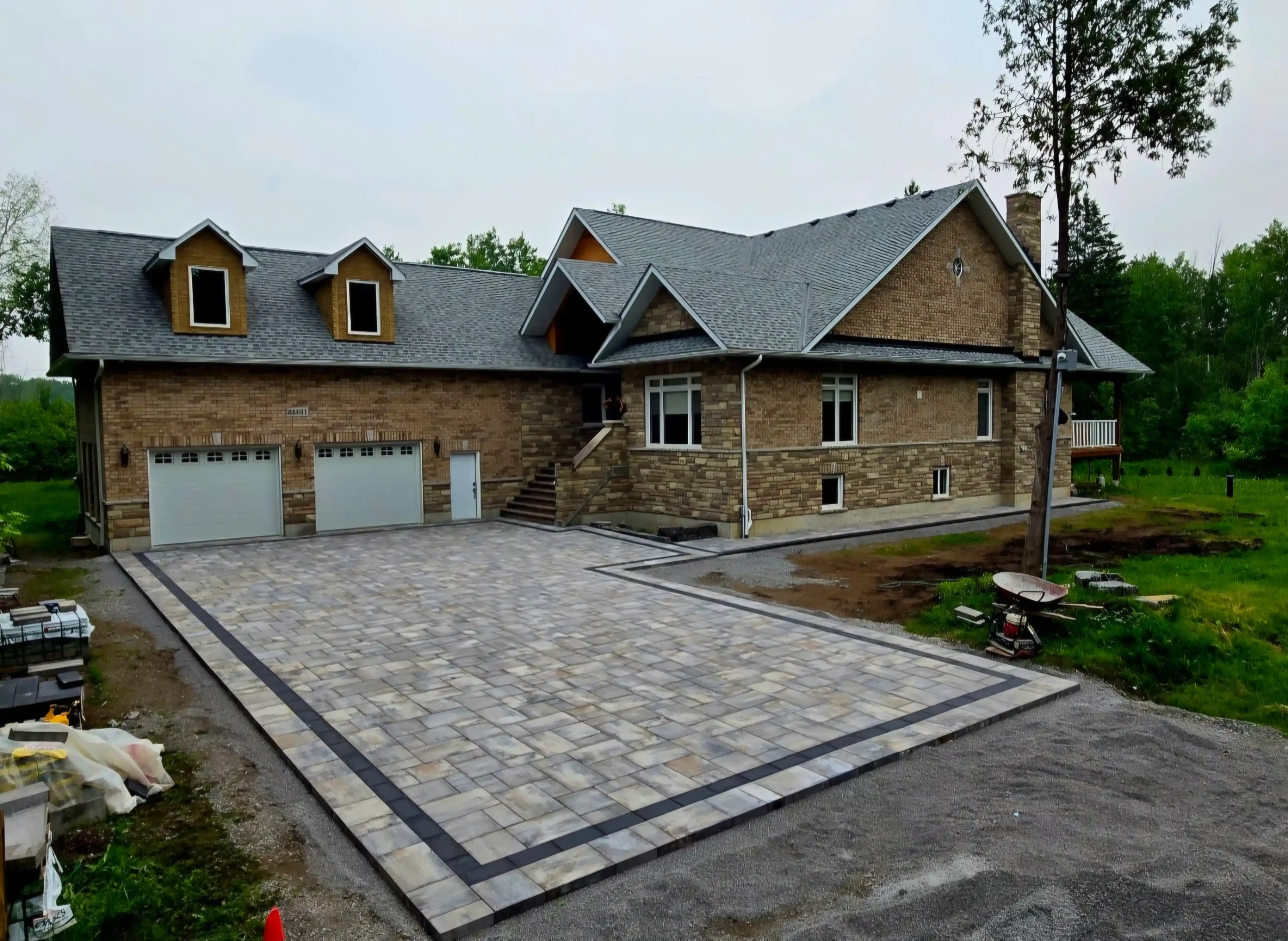
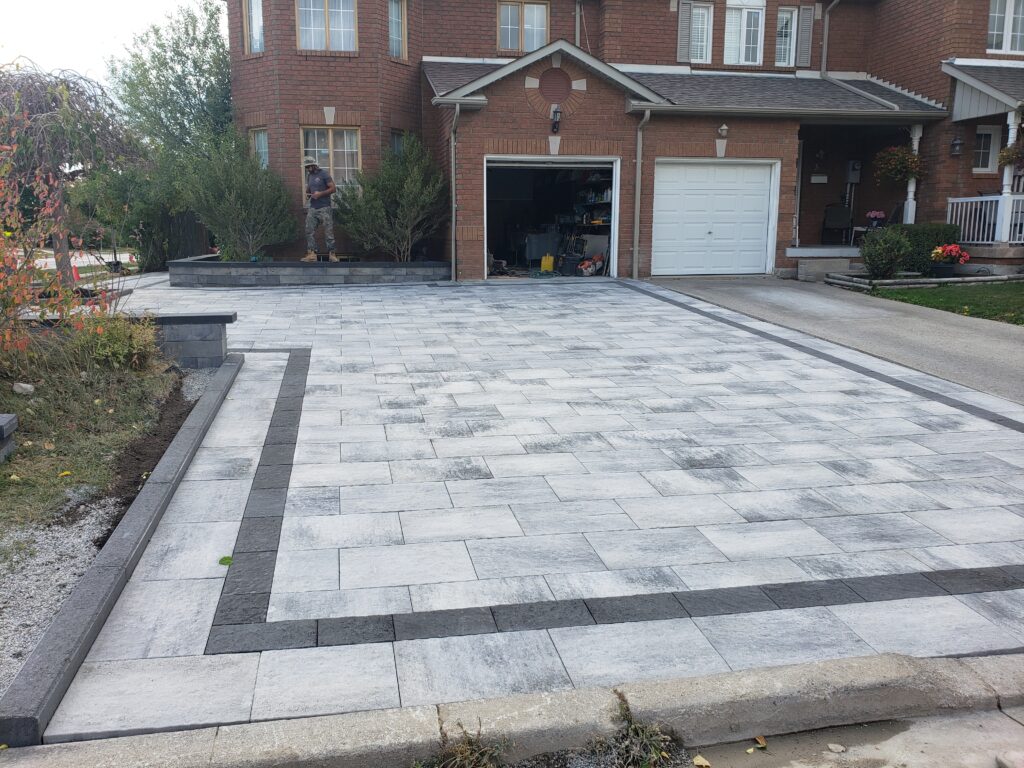
Interlocking Driveways in Aurora: A Complete Homeowner’s Guide
Interlocking Driveways Aurora, An interlocking driveway can completely change the appearance of a home. It can create a cleaner front entrance, improve curb appeal, provide additional design options, and give homeowners more flexibility than a standard asphalt surface. Interlocking Driveways Aurora
For homeowners in Aurora, Ontario, however, appearance is only one part of the decision. A driveway must also be built to handle vehicle traffic, snow removal, rain, changing temperatures, and repeated freeze-and-thaw cycles. The quality of the excavation, base preparation, drainage, compaction, and installation can be just as important as the paving stones selected for the surface. Interlocking Driveways Aurora
This guide explains what Aurora homeowners should know before installing an interlocking driveway, including design choices, construction methods, cost factors, maintenance, repairs, and questions to ask before choosing a contractor. Interlocking Driveways Aurora
Premier Masonry Inc. provides interlocking driveway installation and masonry services in Aurora and surrounding York Region communities. To request an estimate, call 647-882-6656 or visit our contact page.
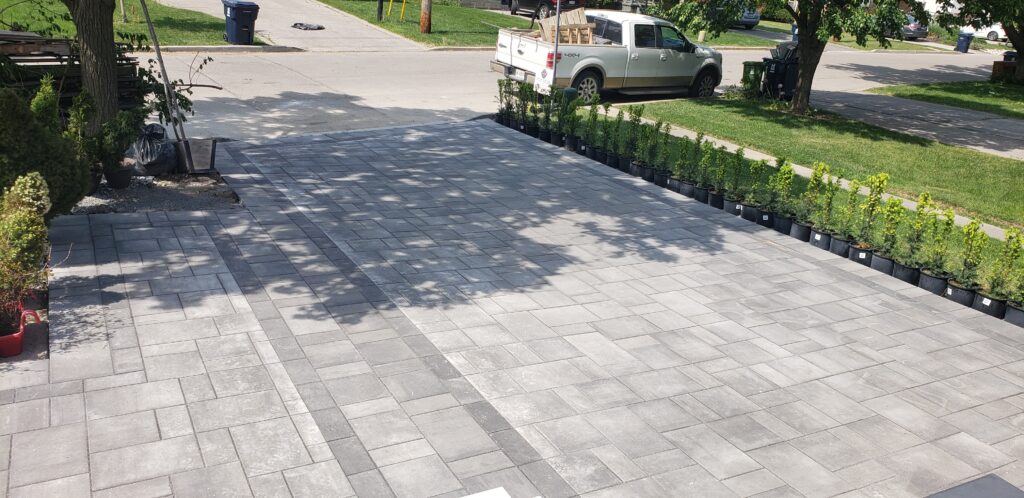
Why Interlocking Driveways Are Popular in Aurora
Aurora includes a mix of established neighbourhoods, newer subdivisions, larger custom homes, and properties with traditional brick or modern exterior finishes. Interlocking stone works well across many of these styles because it can be customized instead of installed as one plain, uniform surface.
Homeowners can choose a subtle grey driveway with a matching border, a warmer stone blend that complements red or brown brick, or a more modern large-format paver for a cleaner appearance. Interlocking can also connect visually with front steps, walkways, retaining walls, garden walls, pillars, and porch finishes.
Another reason homeowners choose interlocking is repair flexibility. If a small section settles or underground work is required, individual pavers can often be removed and reinstalled. With poured concrete or asphalt, localized repairs can be more noticeable. Interlocking Driveways Aurora
Main Benefits of an Interlocking Driveway
Improved Curb Appeal
A driveway takes up a large portion of the front of many properties. Replacing faded asphalt or damaged concrete with well-designed interlocking stone can make the entire home look more finished.
The driveway can be coordinated with the colour of the house, garage doors, porch, steps, stone veneer, and landscaping. A carefully selected border can frame the driveway and create a more polished entrance.
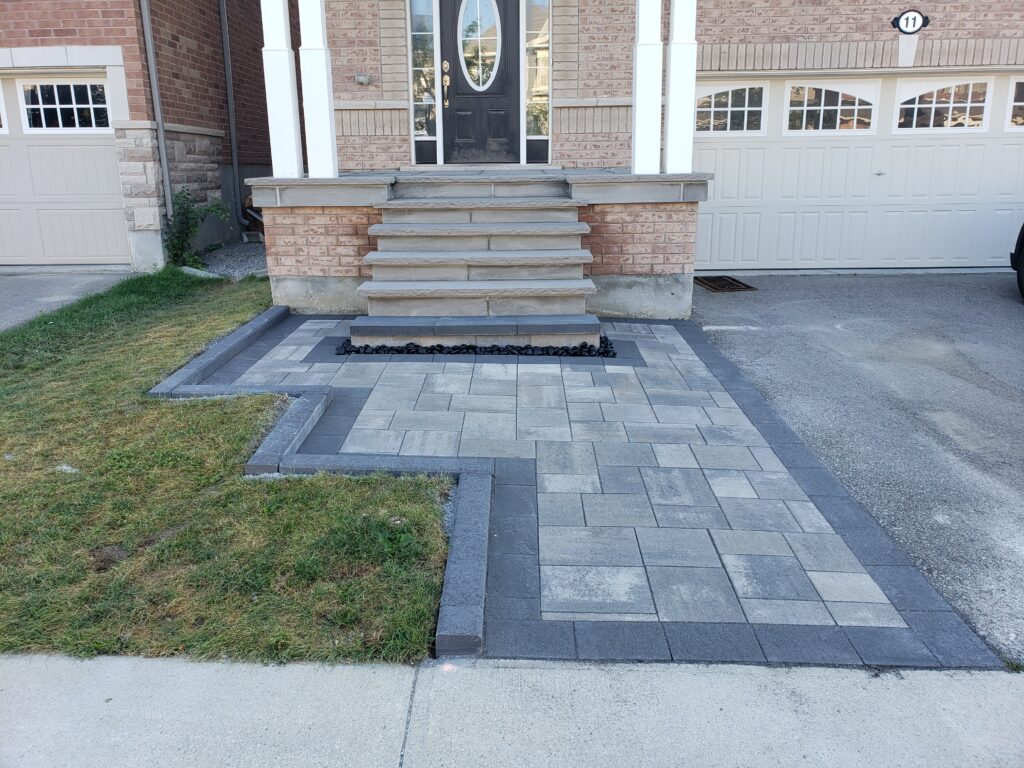
More Design Choices
Interlocking pavers are available in different sizes, textures, colours, and patterns. This gives homeowners more control over the final appearance than most standard driveway materials.
Some homeowners prefer a traditional pattern with smaller rectangular pavers. Others prefer larger slabs with clean lines and a low-contrast border. The right design depends on the size of the property, the architecture of the home, and the surrounding hardscape.
Repairable Sections
If a section of the driveway becomes uneven, the affected pavers can often be lifted, the base corrected, and the same stones reinstalled. This can make localized repairs easier than repairing one continuous surface.
Suitable for Complete Front-Entrance Renovations
Interlocking driveways can be installed together with walkways, porch surfaces, front steps, garden walls, retaining walls, and pillars. Planning these elements as one project often creates a more consistent result than renovating each area separately. Interlocking Driveways Aurora
Interlocking Stone Compared With Asphalt
Asphalt is usually chosen for its lower initial cost and simple appearance. It can be a practical option, but it offers limited design flexibility. An asphalt driveway is normally one dark surface, while interlocking stone can be customized with borders, colour combinations, and different laying patterns.
Interlocking stone may also be easier to repair in small sections. Asphalt repairs can leave visible patches, especially when the new material does not match the age and colour of the existing driveway.
The trade-off is that interlocking generally requires a larger upfront investment. Homeowners should compare the total scope of work, expected appearance, maintenance, and long-term repair options rather than considering only the starting price.
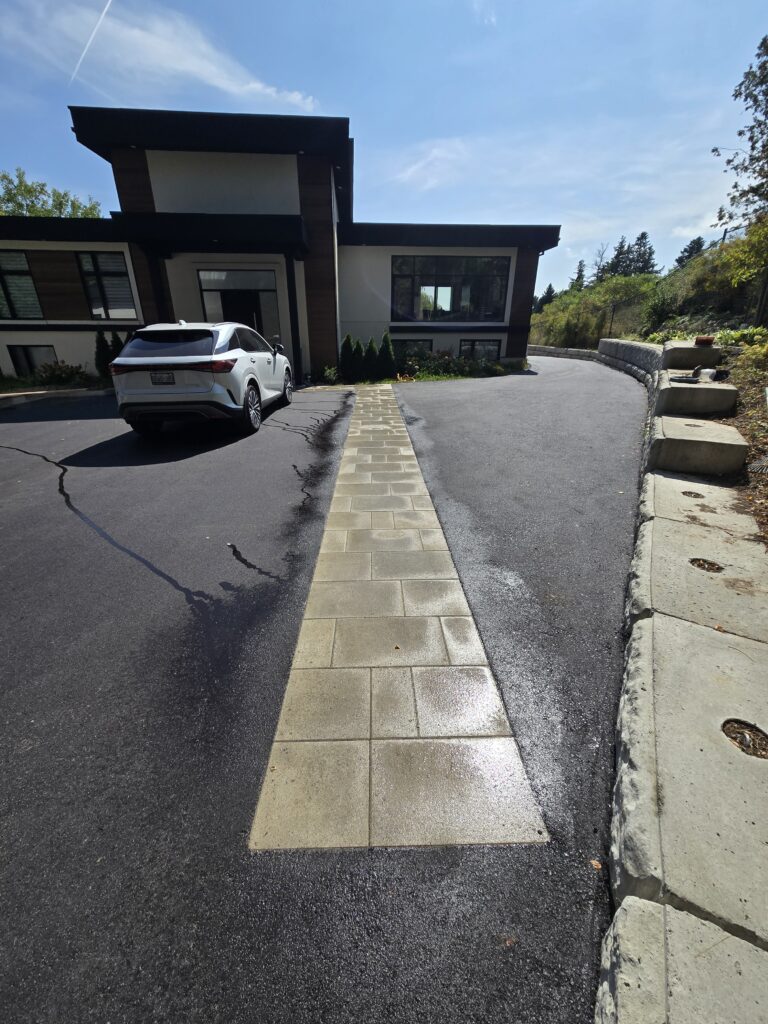
Interlocking Stone Compared With Poured Concrete
Poured concrete creates a solid surface and can be finished in different ways. However, concrete may crack as a result of movement, temperature changes, or site conditions. Repairs to a cracked slab can be difficult to hide.
Interlocking pavers form a segmented surface with joints between individual units. This allows limited movement within the system and makes individual sections easier to access or repair.
Both materials can perform well when installed correctly. For homeowners who want more colour, pattern, and repair flexibility, interlocking stone is often the preferred choice. Interlocking Driveways Aurora
What Makes an Interlocking Driveway Last?
The visible pavers are only the top layer of the driveway. Much of the long-term performance depends on the work underneath.
A strong interlocking driveway usually includes proper excavation, a stable subgrade, suitable aggregate, compaction in controlled layers, correct grading, a consistent bedding layer, edge restraint, and properly installed jointing material.
Installing expensive pavers over a weak base does not create a durable driveway. This is why homeowners should pay close attention to the construction scope when comparing quotes.
Typical Interlocking Driveway Installation Process
1. Site Review and Planning
The first step is to review the existing driveway, garage elevation, front walkway, drainage, access, property layout, and surrounding landscaping.
The contractor should also discuss how the driveway will be used. A driveway that regularly supports work trucks, trailers, or heavier vehicles may require different planning than one used mainly for passenger vehicles.
2. Design and Material Selection
The paving stone should be suitable for driveway use. Not every decorative patio slab is designed to support vehicle traffic.
Homeowners should select the field paver, border, colour, and pattern together. It is helpful to view physical samples outdoors because natural light can make colours appear different than they do in a catalogue or showroom.
3. Removal of the Existing Driveway
Existing asphalt, concrete, or old pavers are removed as required. Debris is loaded and hauled away so the underlying area can be assessed.
4. Excavation
The driveway is excavated to allow space for the required aggregate base, bedding layer, and paver thickness. The excavation depth depends on the site, soil conditions, existing material, and intended use.
5. Subgrade Assessment
Once the existing surface is removed, soft or unstable areas can be identified. Weak areas may need additional excavation or correction before the base is installed.
6. Aggregate Base Installation
The base material is installed in layers and compacted. Compacting in stages is important because a thick loose layer may not become uniformly dense if only the surface is compacted.
7. Grading and Drainage
The driveway should direct water away from the house and garage wherever possible. The final elevation must also work with sidewalks, curbs, walkways, neighbouring properties, and landscape areas.
Poor grading can cause water to collect in low areas or flow toward the foundation. Drainage should be considered before the pavers are laid, not after the driveway is complete.
8. Bedding Layer
A consistent bedding layer is installed over the compacted base. This layer helps create an even setting surface for the pavers. It should not be used to hide major variations in the aggregate base.
9. Paver Installation
The pavers are placed according to the selected layout. Straight lines, curves, transitions, and joints are checked throughout the installation.
10. Borders and Edge Restraint
Borders can improve appearance and help define the shape of the driveway. Proper edge restraint also helps prevent the outside pavers from spreading or moving away from the main field.
11. Jointing Material and Final Compaction
Jointing material is installed between the pavers, and the surface is compacted according to the product requirements. The finished driveway is then cleaned and inspected.
Popular Interlocking Driveway Styles
Modern Grey Driveways
Grey pavers remain popular because they work with many exterior colours. Light grey can create a clean appearance, while charcoal borders can add definition.
Larger-format pavers are often used for newer or more modern homes. These designs usually look best with simple lines and fewer contrasting materials.
Warm Beige and Brown Blends
Warmer tones often complement traditional brick homes. Beige, brown, and limestone-inspired colours can create a softer appearance and blend naturally with garden walls and stone steps.
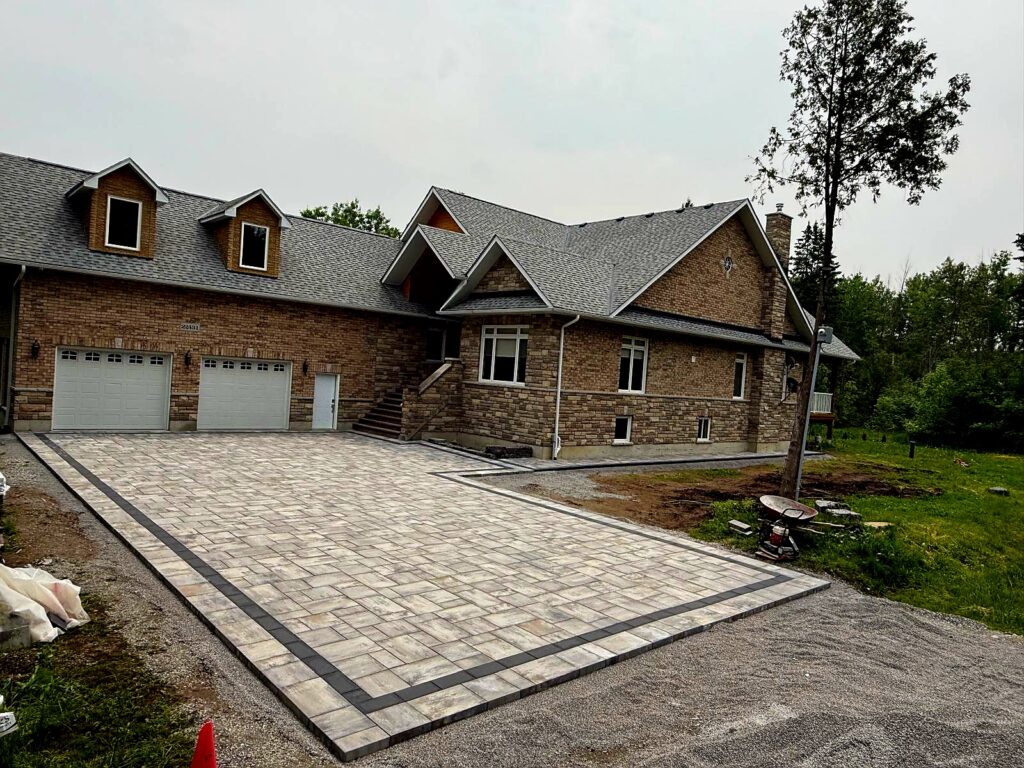
Contrasting Borders
A darker border around a lighter driveway can create a framed appearance. Borders may also be used to connect the driveway to the front walkway or highlight curves.
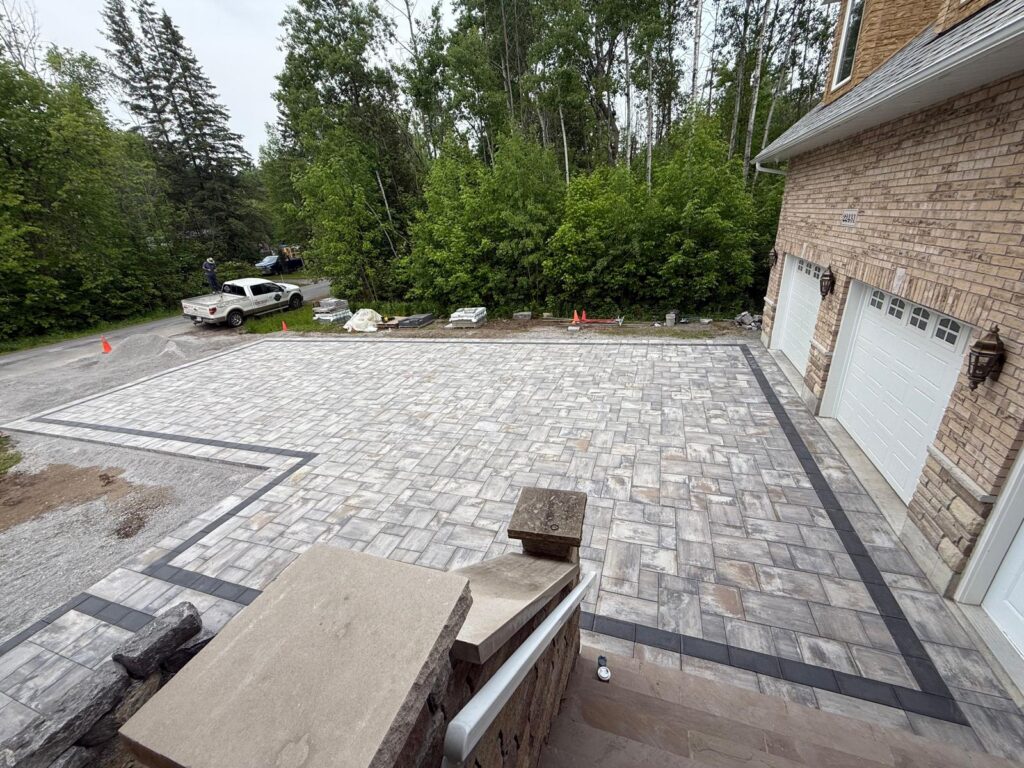
Low-Contrast Designs
Some homeowners prefer the border and field to be close in colour. This creates a more subtle appearance and can make a smaller front entrance feel less busy.
Popular Paver Patterns for Driveways
Herringbone
Herringbone is a classic pattern that creates strong visual movement. It is often used with rectangular pavers and can work well on driveways because the pattern interlocks in multiple directions.
Running Bond
Running bond uses offset rows of rectangular pavers. It provides a clean and organized appearance and can help visually lengthen or widen a space depending on the direction of the layout.
Modular Patterns
Modular patterns combine several paver sizes. They create a less repetitive look and are popular for homeowners who want a natural or upscale appearance.
Large-Format Layouts
Large-format pavers can create a modern appearance, but the selected product must be approved for vehicular applications. The design should also account for cuts, driveway width, and turning areas.
How Much Does an Interlocking Driveway Cost in Aurora?
There is no single price that applies to every interlocking driveway. The cost depends on the site conditions, project size, selected materials, labour, access, and the amount of preparation required. Interlocking Driveways Aurora
Important price factors include:
- Total square footage
- Existing surface and demolition requirements
- Excavation depth
- Amount of material requiring disposal
- Condition of the soil and subgrade
- Access for machinery and deliveries
- Paver manufacturer and collection
- Paver thickness, size, texture, and colour
- Border type and quantity
- Pattern complexity
- Curves and detailed cuts
- Drainage corrections
- Walkways, steps, walls, or other connected work
A lower quote may include less excavation, less aggregate, fewer borders, or a different installation method. Homeowners should compare the written scope of work carefully instead of looking only at the total price. Interlocking Driveways Aurora
Common Problems With Interlocking Driveways
Sunken Areas
Settlement may happen because of weak subgrade, insufficient compaction, drainage issues, or movement near utility trenches. A proper repair should address the cause beneath the pavers.
Loose Borders
Border stones can move when edge support is missing, damaged, or poorly installed. Once the border begins to spread, joints may become wider and nearby pavers may shift.
Water Pooling
Low areas can collect water and create slippery conditions in winter. Pooling usually indicates a grading or settlement problem.
Weeds in the Joints
Weeds often grow from seeds and organic material that collect near the surface. Regular cleaning and maintaining the jointing material can help reduce growth.
Joint Sand Loss
Jointing material can be removed by pressure washing, drainage, insects, or normal wear. Missing material should be replaced with a compatible product after proper surface preparation.
Can an Existing Interlocking Driveway Be Repaired?
Many interlocking driveways can be repaired without complete replacement. A contractor may be able to lift the affected stones, correct the base, and reinstall the original pavers.
Repair may be appropriate for localized settlement, low spots, loose borders, uneven garage transitions, or areas disturbed by utility work.
If the paver has been discontinued, an exact match may not be available. In some cases, existing stones can be rearranged so the most visible areas remain consistent.
Interlocking Driveway Maintenance
Regular Cleaning
Sweep leaves, soil, and debris from the surface. Removing organic material from the joints can help reduce weeds and staining.
Pressure Washing Carefully
Pressure washing can clean the surface, but excessive pressure may remove jointing material. The nozzle should not be held too close or directed aggressively into the joints.
Replacing Jointing Material
The joints should be inspected periodically. Missing material can be replaced after the surface is cleaned and prepared according to the product instructions.
Managing Oil and Vehicle Fluids
Oil, fuel, and other vehicle fluids should be cleaned as soon as possible. Older stains can be more difficult to remove.
Sealing
Sealing is optional for many pavers. It may deepen the colour, change the finish, and make some stains easier to clean. However, the wrong product or poor application can create uneven colour, whitening, or a slippery surface.
Homeowners should confirm that the sealer is compatible with the paver and follow the manufacturer’s current instructions.
Winter Care for an Interlocking Driveway
Winter maintenance is especially important in Aurora. Snowplows, metal shovel edges, ice, and de-icing products can affect the surface.
- Use a shovel or plow with a protective edge when possible.
- Avoid striking raised borders or individual pavers.
- Use de-icing products approved by the paver manufacturer.
- Address low areas that repeatedly collect and freeze water.
- Remove leaking vehicle fluids before they stain the surface.
Driveway Extensions in Aurora
Some homeowners want to widen an existing driveway or add another parking space. Interlocking can be used to create an extension that matches or complements the existing driveway.
Before construction, homeowners should confirm municipal requirements, property boundaries, curb rules, and any permit requirements. A driveway extension should be planned so it does not create drainage problems or conflict with existing landscaping.
How to Choose an Interlocking Driveway Contractor
Homeowners should ask more than how much the project will cost. A detailed quote should explain what is being removed, how the base will be prepared, what materials will be used, and how drainage will be handled.
Useful questions include:
- What excavation is included?
- What type of aggregate will be used?
- How will the base be compacted?
- How will water drain from the driveway?
- Is the selected paver approved for vehicle traffic?
- What border and edge restraint will be installed?
- Who is responsible for permits or approvals?
- What workmanship warranty is included?
- How will unexpected site conditions be handled?
Why Choose Premier Masonry?
Premier Masonry Inc. has been completing masonry and hardscape projects since 2012. Our services include interlocking driveways, patios, walkways, retaining walls, garden walls, steps, flagstone work, concrete, and other exterior masonry projects.
We focus on proper preparation, careful installation, clear project scopes, and designs that fit the home rather than using the same layout on every property.
Premier Masonry serves Aurora, Newmarket, Richmond Hill, Vaughan, King City, Whitchurch-Stouffville, Nobleton, and selected surrounding communities.
Our workmanship warranty is two years, subject to the terms and exclusions in the written agreement. Product warranties are governed by the applicable manufacturer.

Frequently Asked Questions
How long does an interlocking driveway last?
The service life depends on site conditions, base preparation, drainage, product quality, vehicle loads, and maintenance. A properly installed driveway can provide many years of use.
Can interlocking be installed over an old asphalt driveway?
For a complete replacement, the existing asphalt is normally removed so the underlying base and subgrade can be assessed and prepared for the new paver system.
What is the best colour for an interlocking driveway?
The best colour depends on the house. Grey blends are popular for modern homes, while beige, brown, and limestone tones often suit traditional brick.
Do interlocking driveways need polymeric sand?
Many installations use a compatible jointing material. The correct product depends on the paver, joint width, bedding system, and manufacturer requirements.
Can damaged pavers be replaced?
Yes, individual pavers can often be removed and replaced. Matching may be difficult if the product is discontinued or the existing driveway has weathered over time.
Should an interlocking driveway be sealed?
Sealing is optional. It may enhance colour and help with cleaning, but the driveway must be properly prepared and the product must be compatible with the paver.
Can an interlocking driveway be widened?
Yes, subject to property layout and municipal requirements. The extension should be properly excavated, graded, and connected to the existing driveway.
How long does installation take?
The schedule depends on driveway size, access, weather, design complexity, excavation, and any additional work such as steps, walls, or walkways.
Request an Interlocking Driveway Estimate in Aurora
A well-planned interlocking driveway can improve the appearance and function of your front entrance while giving you more design flexibility than a standard asphalt surface.Interlocking Driveways Aurora
Premier Masonry provides professional interlocking driveway installation, driveway extensions, walkways, steps, retaining walls, and related masonry services throughout Aurora and York Region.
To discuss your project, call 647-882-6656, email info@premiermasonry.ca, or visit our contact page.
For more information about concrete paver systems and industry best practices, visit the Interlocking Concrete Pavement Institute (ICPI).